Showing posts with label Mammals. Show all posts

Monday, 14 October 2013

Lemoine Point Conservation Area

Saturday 12th and Monday 14th October 2013

Well, Autumn is in full swing and here in Kingston, the leaves have already turned. In fact, many of the trees are actually now looking fairly bare. The weather though has been great with lots of bright sunny days and above average temperatures. Many of the summer residents have now left, replaced by numerous winter wildfowl. Migration is also coming to an end, though a few species are still coming through and taking advantage of the good weather before continuing further south.

Lemoine Point Conservation Area is located just west of Kingston's airport and is a great spot for seeing the wildlife within just minutes of the city centre. Bordering Lake Ontario, it includes 136 hectares of mixed forest and grassland and can be quite a migrant trap in the Spring and Autumn as well as hosting a wide range of breeding species during the summer. Personally, I tend to visit Marshlands Conservation Area more than Lemoine Point because it is closer to home, is far-less visited and is definitively my 'home patch', but over the last couple of days, Lemoine Point has held a variety of interesting species and colours.

Autumn Woods - Lemoine Point CA, Kingston, ON

To get the ball rolling, I saw yet another addition to my life list on Saturday. To make it even better, it was an owl - namely an Eastern Screech-Owl. Some species, owls included, are always just that bit more exciting to see so I was very pleased with this one. Its presence was given away by a host of chickadees, juncos, cardinals and sparrows mobbing the poor thing as it was trying to rest. It was certainly well-hidden and this photo is as good as it gets.


Eastern Screech-Owl - Lemoine Point CA, Kingston, ON
Lemoine Point is visited by many people, all there to enjoy the nature. However, they all seem to do it in different ways - cycling, jogging, dog-walking, and so-on. This means the wildlife is quite habituated, with birds like chickadees accustomed to feeding from the hand. Nuthatches and even woodpeckers will do so too and I know of at least one Northern Cardinal that does likewise. White-tailed Deer are the largest mammal present at the site and, they too, will actually approach people to see what's on offer. Add to this the squirrels and chipmunks and it is pretty hard to leave Lemoine Point without having an encounter with nature.


Eastern Chipmunk - Lemoine Point CA, Kingston, ON
Other birds that often have birders excited are the thrushes. Here in Canada, the commonest thrush is the American Robin, though it doesn't tend to hang around for long during the winter months. The American Robin is in the same genus as many of the 'typical' European species and is about the same size as the European Blackbird. However, it is the much smaller Catharus species that have had me excited over the last month or so. The first to come through is the Grey-cheeked Thrush, followed by Swainson's Thrush and then Hermit Thrush. Of course there is overlap (for example I saw two late Swainson's today) but it generally holds true. I've been fortunate enough to see good numbers of all three of these shy species this year but have only managed to get photos of Hermit Thrush and, bizarrely, a single leucistic Swainson's Thrush (see my Flickr account). The following shot, as all pictures on today's blog, was taken this weekend at Lemoine Point.


Hermit Thrush - Lemoine Point CA, Kingston, CA
Red-winged Blackbirds and lesser numbers of Common Grackle are flocking at the moment (often with the resident European Starling) in preparation for their onward southerly journey. It is also possible to see the much less common Rusty Blackbird at this time of year and this morning I had a single female high in a tree looking for its buddies. Most striking is its white eye, a classic indicator of this species.


Rusty Blackbird (female) - Lemoine Point CA, Kingston, CA
Finally, here is a Yellow-rumped Warbler of the eastern 'Myrtle' form. This is really the only warbler still to be seen in any numbers yet, for some reason, I just can't seem to get a decent shot...


Yellow-rumped Warbler - Lemoine Point CA, Kingston, CA
Till next time...

Mark.


Saturday, 23 March 2013

Some Canadian Goodies

Saturday 23rd February - Thursday 21st March, 2012

Once again, it's taken a while to get back to the blog. I guess things have been relatively slow in terms of new pictures and that has held me back. However, the birding has been pretty good and signs of Spring are definitely here, even though the last week has seen a further cold spell and more snow. Ironically, as I look at my choices for new photos, I find I may actually have more than I thought, so here goes...

...starting back in February with an improved variety and number of birds on my feeders. White-breasted Nuthatch has always been regular, but I now get the occasional Red-breasted Nuthatch as well. These two are clearly different but you may be surprised to know the Red-breasted Nuthatch is only the size of a chickadee. Both these birds are males, showing black rather than grey crowns.


White-breasted Nuthatch (male), Kingston, ON


Red-breasted Nuthatch (male)

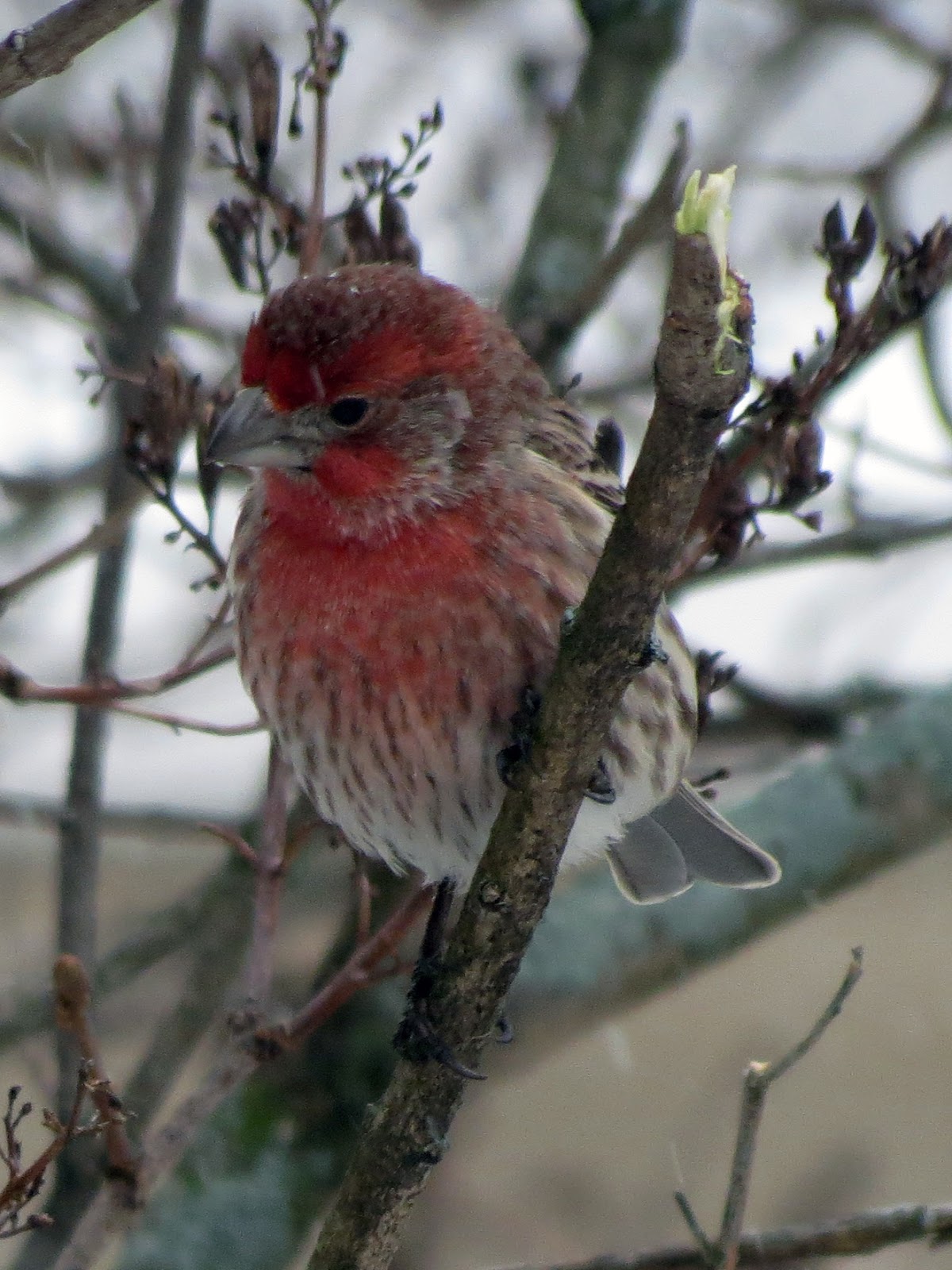
Likewise, Downy Woodpecker is occasional, with the odd Hairy Woodpecker putting in an appearance too. I talked about woodpecker ID in the last post, so to see them both on the feeders has been great. House Finch (actually a type of Carpodacus 'rosefinch') is here most days too, along with Dark-eyed Junco and, of course, Black-capped Chickadee. The male House Finch has vivid red on its head and upper chest. The female lacks this colouration and is quite heavily streaked on the flanks. Juncos are easily the commonest seed-eater in the garden. They have distinctive dark grey (male) or brown (female) upperparts, white bellies, white bills, and white outer-tail feathers that are easily seen in flight.


House Finch (male), Kingston
Dark-eyed Junco (male), Kingston
At the end of February, I was informed that the roads around 'DuPont Lagoons', now owned by Invista, are actually accessible to birders and dog walkers despite all the 'no entry' signs. This was good news for me as the site is only half an hour's walk from the house and the water stays open all winter due to, I assume, warm water coming out of the factory. My first trip there provided a lifer in the form of Redhead, a duck species superficially very similar to the European Pochard. As well as many other common wintering ducks, I picked up an immature White-crowned Sparrow and a cracking pair of American Kestrel - both new for the year. Since this first visit, the lagoons have yielded other goodies such as Wood Duck, Greater Scaup and Hooded Merganser, though now that Lake Ontario is mainly unfrozen, the typically high concentration of Mallard, American Black Duck and American Coot has dropped right off.

American Kestrel (male), Invista, Kingston

I have also started seeing a few mammals, though these have been much harder to photograph. Invista has yielded Musk Rat and a mating pair of River Otter. A Red Fox was seen near its den in Lake Ontario Park chased, unfortunately, by a dog let off its lead by an irresponsible owner. I certainly shared my views with that particular dog walker. I have also seen a few Eastern Chipmunks, as well as two 'new' mammals, North American Porcupine and Raccoon - the latter in my garden. However, the only mammal I managed to photograph is this White-tailed Deer, seen at another new location for me, Lemoine Point Conservation Area.

White-tailed Deer (female), Lemoine Point Conservation Area, Kingston
Lemoine Point Conservation Area is a large 136 hectare area of forest, marsh and grassland near the airport, just west of the city. I first visited it on a Kingston Field Naturalists meeting in early March where I finally got to meet some of the local birders. The time of year didn't help with bird sightings but I have managed to get back once more and picked up my first 'true' Spring migrants, Common Grackle and Red-winged Blackbird. These two species now seem to be in every bush and garden and have even been investigating my feeders. The following two pictures were actually taken at another location, the Old Davis Tannery in Kingston's Inner Harbour. The grackle has a white stain on its tail - a gift from another bird.


Red-winged Blackbird - Old Davis Tannery, Kingston


Common Grackle - Old Davis Tannery, Kingston

My second trip to Lemoine Point also allowed further sightings of White-tailed Deer, which it turns out are quite tame. I guess they either get fed or have taken to foraging around the bins and car parks. I was also lucky enough to see this female Ruffed Grouse pretending to be a dead twig high up in a bush. Fortunately it's disguise didn't fool me and I got a couple of interesting shots before it gave up and noisily flew off through the undergrowth.


Ruffed Grouse (female) - Lemoine Point CA, Kingston
I have been doing a fair bit of birding in Kingston's Inner Harbour, particularly since the ice has melted. My first returning ducks were Green-winged Teal, spotted on the only open patch of water in early March. Since then American Wigeon, Ruddy Duck, Pied-billed Grebe and Hooded Mergansers have all returned. Large numbers of Lesser and Greater Scaup have also been present, with a fair number of Common Goldeneye, Long-tailed Duck and a few Bufflehead. These birds normally seek more open waters but the scaup have been putting on quite a show at both the Inner Harbour and my local patch, Portsmouth Olympic Harbour.


Green-winged Teal (male) - Old Davis Tannery, Kingston

Long-tailed Duck (male) - Portsmouth Olympic Harbour, Kingston

Tundra Swan - Old Davis Tannery, Kingston
The Tundra Swans pictured above are the same species as Europe's Bewick's Swan. This Nearctic subspecies is often called Whistling Swan (Tundra Swan covers them both) and shows very little, if any, yellow at the base of the bill, whereas the Bewick's shows quite a large round patch. In fact, on these birds, I could barely pick out anything more than the slightest hint.

It has been fantastic to see so many scaup lately, and often close to shore. Apparently Greater Scaup is the commoner of the two species in this area, but earlier in the month this was reversed and I was seeing between 150-200 Lesser Scaup in the Inner Harbour, with just a handful of Greaters. Since then the number of Greater Scaup has increased - a couple of days ago I had over 500 at Portsmouth Olympic Harbour, with only 30 or so Lessers in with them. Head shape is one of the key features to separating the two species, along with Lesser's smaller size (tricky), a noticeable greyish wash to the white flanks and according to some a more purplish, rather than green, iridescence to the head. I didn't find this latter feature to be very helpful at all, and at times even head shape was difficult to judge. In flight, Lesser Scaup can be told from Greater Scaup by a much shorter wing bar that does not extend into the primaries. Can you see the difference?

Greater Scaup (male and female) - Portsmouth Olympic Harbour, Kingston


Greater Scaup (male and female) - Portsmouth Olympic Harbour, Kingston

Lesser Scaup (male) - Portsmouth Olympic Harbour, Kingston
This Lesser Scaup shows a more peaked crown that is flat at the back of the head, a small black tip to the bill (slightly larger in Greater) and distinctly greyish flanks (compared to the crisp white of Greater). While seeing these birds so close has been great, it does highlight the challenge of more distant birds, which may have to be left as simply 'scaup sp.'

To speed things up a little, here are a couple of the 700 Bohemian Waxwings that showed up for a day early in the month...


Bohemian Waxwing - Portsmouth Olympic Harbour, Kingston
...one of the many Ring-billed Gulls that grace the harbour walls,

Ring-billed Gull - Portsmouth Olympic Harbour, Kingston
and two shots of American Robin. I can see why 'robin' springs to mind, but just get over it - they're thrushes, and real cracking ones at that too.

American Robin - Marshlands Conservation Area, Kingston

American Robin - Marshlands Conservation Area, Kingston

Finally, I come to the end with a brief account of a very enjoyable morning over on Wolfe Island earlier in the week. I went with a fellow birder, Paul, who kindly picked me up at home. His main goal was Lapland Longspur (Lapland Bunting) and, good on him, we found a male coming into breeding plumage within minutes of being on the island. It was associating with a flock of 20 or so Horned Larks (Shore Larks) but unfortunately didn't hang around for long. Horned Larks turned out to be quite numerous as we progressed around the island and we also got to see perhaps 45 Snow Buntings too. We later found another flock of 8 Lapland Longspur. Here are four of them for you, with a closer shot of the male just below.


Lapland Longspur, Wolfe Island


Lapland Longspur (male), Wolfe Island
And so to the subject of this post - a Canadian Goodie. At long last I've seen a Snowy Owl. Yes, I did see one on Ben Macdui in the Cairngorms, Scotland back in the 1987 but that is some time ago! This one was also much easier; it was sitting on a telegraph pole right beside the road!


Snowy Owl, Wolfe Island
Other highlights and additions to my year list included a male Northern Harrier, Northern Shrike, and the year's first Killdeer. Back on the mainland, at Violet Dump, we also had three Iceland Gulls, a first winter, a second winter and adult winter. For the gull watchers out there, this was actually Kumlien's Gull, a subspecies new to me and therefore very agreeable despite the bitterly cold northerly wind whipping across the open landfill. Thanks Paul for a great morning.

Till next time...

Mark.
 

Friday, 22 February 2013

Barred Owl, Pileated Woodpecker and more...

Sunday 10th - Tuesday 19th February, 2012

It's been a relatively slow couple of weeks bird-wise but that's not surprising really. February is often that month when winter gives you another little surprise before handing over to the business of Spring in early-mid March. Admittedly, the days are lengthening quite noticeably now and other than a few snow days (including a news-worthy storm), we have had mainly bright but bitingly cold weather.

Despite not seeing anything new, I've managed some great observations of commoner species and have had the time and opportunity to grab one or two fairly decent shots too. I'll never meet the standard or have the equipment of some of the other amateurs out there (let alone pros), but for me the primary experience of birding is in seeing the wildlife do its own thing and being there to experience and record it.

The following three pictures show two species of squirrel, the Eastern Grey Squirrel and the American Red Squirrel. However, here in southern Ontario most of our 'grey' squirrels are actually black. The blond one is genuinely unusual and the only one of its colour form I've seen. We do have the occasional grey form but they are probably outnumbered by at least 10:1. The red squirrel is much smaller but surprisingly aggressive towards the greys. A squirrel story follows the pictures...


Eastern Grey Squirrel stealing bird seed, My Garden


Eastern Grey Squirrel - 'Blondie', Lake Ontario Park


American Red Squirrel, Lake Ontario Park

I've now got 3 bird feeders set up in the garden, two with regular mixed grain bird seed and one with peanuts. I've had mixed success; some days with House Finch, Dark-eyed Juncos and even Northern Cardinal, but more often just Black-capped Chickadees and the occasional White-breasted Nuthatch. The nuthatches tend to give themselves away by calling constantly and just like a toy trumpet. I've also been battling with the local squirrels. They are the Eastern (American) Grey Squirrel - the same species that amazed audiences in the UK many years ago by solving increasingly complex challenges for a reward of food. Their antics even became an advert for beer (Carling Black Label) performed to the theme music of Mission Impossible. And yes, my squirrels have been learning too and are becoming increasingly competent at getting their reward. Having learnt the hard way, I now have my feeders hanging off a thin 3mm plastic line, about 4 feet off the ground and 4-5 feet away from foliage. However, one young male has taken to leaping from higher branches and landing on top of the biggest feeder. To do this he first cleared a 'jump-way' by removing twigs in his way! He usually just skids off the feeder shaking enough onto the ground to keep him and his companions going for half an hour or so. However, yesterday he learnt a new trick and managed to grab onto the line with his front paws first, leaving his hind legs dangling in the wind. He then hooked all four legs to the underside of the line and shimmied along it, upside down, to the peanut feeder which, despite being metal, provides lots of 'hand-holds'. Unfortunately the lid on this particular feeder isn't tied down, so with a little manoeuvring, he pulled it up, tipped it sideways and spilled his reward all over the ground. Being a meany, I have now removed even more branches - what will he do next I wonder?

Back to the birds then, and off to a great start with this lovely pair of Downy Woodpeckers seen at Lake Ontario Park. The Downy Woodpecker is the smallest species in North America, and is about the same size as the Europe's Lesser Spotted Woodpecker - that's about 15cm long, or the size of a nuthatch. The female lacks the red hind-crown shown by the male.


Female Downy Woodpecker, Lake Ontario Park

Male Downy Woodpecker, Lake Ontario Park


I regularly see three species of woodpecker in the local area. The next, Hairy Woodpecker is superficially quite similar to Downy, but being almost twice the size and with a much longer and stouter bill shouldn't really pose any identification problems.


Male Hairy Woodpecker, Lake Ontario Park
The third species is Red-bellied Woodpecker. I regularly see a single bird in the park but have yet to see this species elsewhere. I actually wrote about it in an earlier post as it was a lifer for me but as I have a bit of a woodpecker theme going, here it is again. And before you ask, 'Why isn't it called 'Red-headed Woodpecker'?', well there's another much rarer species that's already bagged that name... However, this one is easy to identify with its fine barring on the back and extensive red crown. In this species the female also shows red, but only on the nape and at the base of the bill.


Male Red-bellied Woodpecker, Lake Ontario Park

So, to the last of today's woodpeckers. Just 2 streets over from mine, in a quiet but residential area of the city, I came across a female Pileated Woodpecker busy hammering away at a tree in someone's garden. From North America's smallest species to the largest is quite something - this species is getting on for half a metre in length. She was completely unconcerned by my presence, or by the passers-by who seemed more interested in this lanky Brit apparently staring in wonder at a tree. The Pileated is not a new species for me, and seems to have a thin but quite widespread distribution.


Female Pileated Woodpecker, Lake Ontario Park
Well, this little write-up is turning into quite an essay so, cracking on, I'll just post some photographic highlights including this cracking Barred Owl seen in Marshlands Conservation Area,...


Barred Owl, Marshlands Conservation Area
... a very photogenic female Northern Cardinal seen the same day,...


Female Northern Cardinal, Marshlands Conservation Area

...and this American Tree Sparrow, which is now a regular entertainer at the far end of Lake Ontario Park.


American Tree Sparrow, Lake Ontario Park
To round off today's blog, I just want to share my latest Pine Warbler picture (which I've not seen now for nearly a week) and an illustrative shot of an American Black Duck that shows the intricacies of their plumage.


American Black Duck, Lake Ontario Park


Pine Warbler, Lake Ontario Park
Till next time...

Mark.


Friday, 8 February 2013

Some birds of Okhla Bird Sanctuary, New Delhi, India (Pt 2)

Wednesday 24th and Monday 29th October 2012

This is Part 2 of a post dedicated to some photographic birding highlights from Okhla Bird Sanctuary, visited on two dates in October 2012. A full report, with maps and a systematic list will be posted online shortly. In the meantime, you can read the same report on a separate page on my blog - Bird Report for Okhla Bird Sanctuary

Part 1 can be seen here

Till next time...

Mark.


Asian Pied Myna, Okhla Bird Sanctuary


Bluethroat, Okhla Bird Sanctuary

Indian Spot-billed Duck, Okhla Bird Sanctuary


Lesser Whitethroat, Okhla Bird Sanctuary
Large Grey Babbler, Gandhi Remembrance Museum
Striated Babbler, Okhla Bird Sanctuary


Striated Babbler, Okhla Bird Sanctuary


Long-tailed Shrike, Okhla Bird Sanctuary
Greater Coucal, Okhla Bird Sanctuary


Green Bee-eater, Okhla Bird Sanctuary

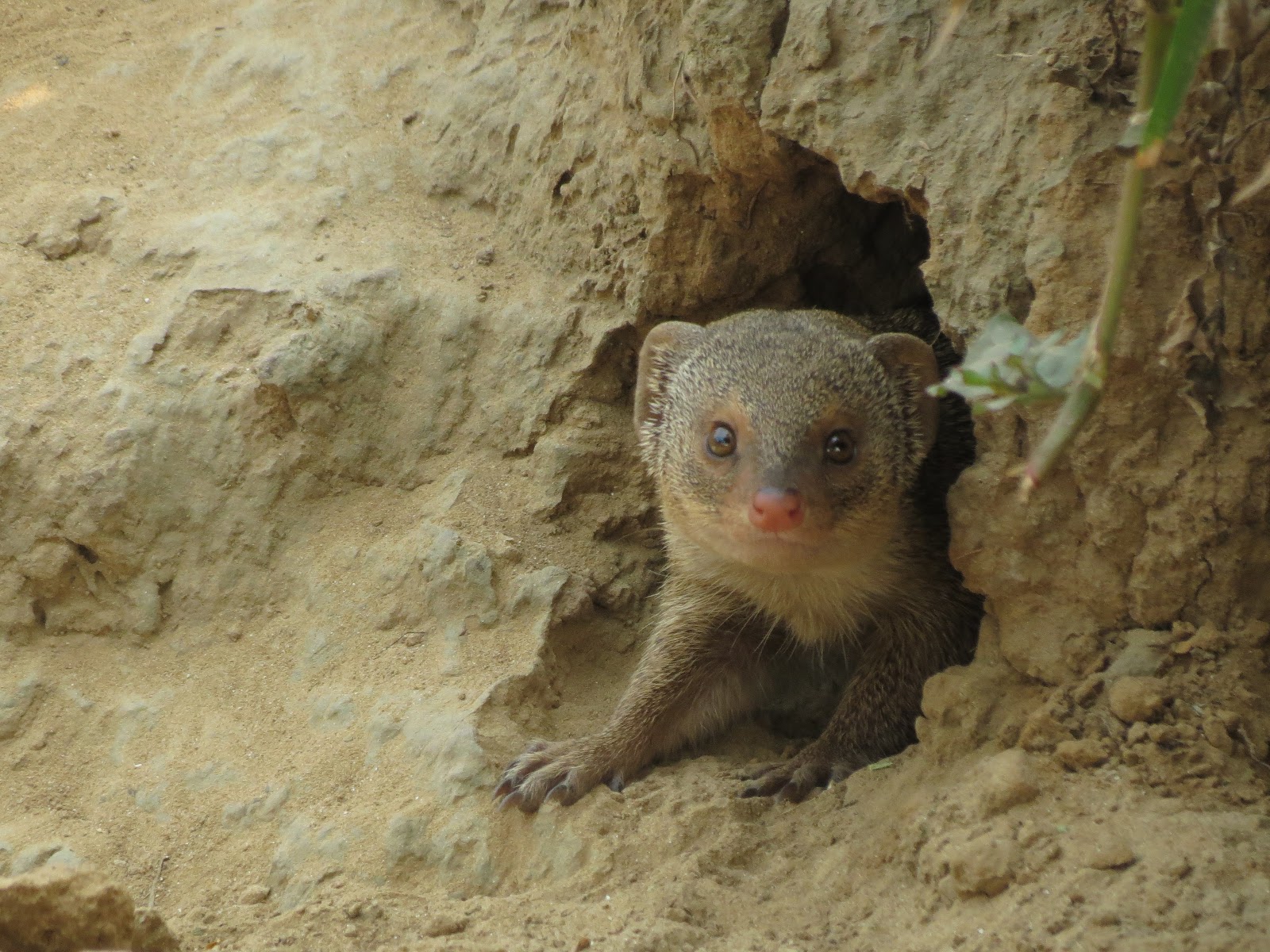
And a couple of mammals...


Northern Palm Squirrel, Gandhi Remembrance Museum


Small Asian Mongoose, Anand Vihar ISBT Bus Station